



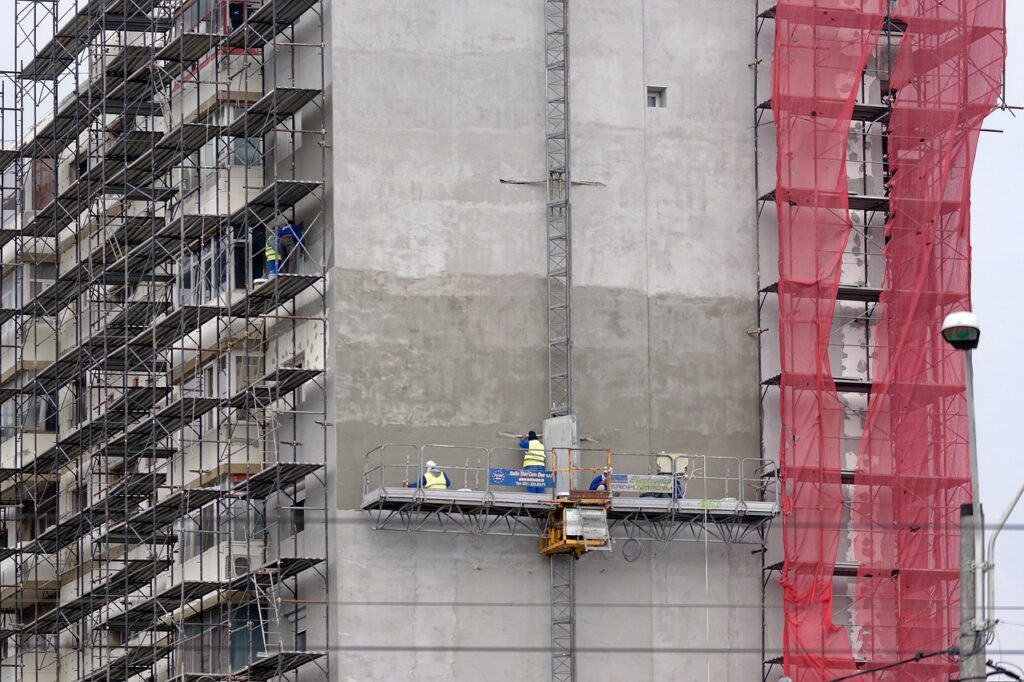

Few provisions cost landlords as much liquidity in the first year as this one – and few are noticed as late: anyone who renovates after the purchase is often unknowingly deciding whether the invoices are deductible immediately or must be written off over decades.
At a glance
- If expenditure on repairs and modernisation within three years of acquisition net exceeds 15% of the building's acquisition cost, it becomes production costs (Section 6 (1) no. 1a EStG).
- Consequence: no immediate deduction as income-related expenses, but depreciation instead – for existing properties usually over 50 years.
- The reference figure is not the purchase price but solely the Building portion. This means the purchase price allocation determines how high the threshold is.
- The calculation is made excluding VAT – even for a private landlord who pays gross.
- The Federal Fiscal Court has interpreted the term broadly since 2016: even cosmetic repairs count towards it.
What this is about
Anyone who acquires a rented property usually renovates it first. Bathrooms, floors, windows, heating – much of this falls due after the purchase, and the invoices arrive in the same year. In tax terms this would be the ideal case: maintenance expenditure reduces rental income immediately and in full.
This is precisely the effect limited by Section 6 (1) no. 1a EStG. Where expenditure on repairs and modernisation within three years of acquisition exceeds 15% of the building's acquisition cost, it is treated in its entirety as acquisition-related production costs. The immediate deduction is then lost retrospectively for every measure of that period – not just for the excess.
An amount that would have noticeably reduced one year's tax burden thus becomes a position spread at 2% per year over half a century. The money is not lost, but the interest effect is considerable – and in the early phase, when the financing is already tight, often painful.
What counts – and what does not
The distinction is the real point of dispute in practice:
| Counts towards the 15% test | Stays outside |
|---|---|
| Repairs and modernisation of every kind: bathroom, heating, electrics, windows, floors | Maintenance work customarily incurred each year (heating servicing, chimney sweep, meter reading charges) |
| Cosmetic repairs such as painting and wallpapering – even where individually minor | Extensions within the meaning of Section 255 (2) sentence 1 HGB (annex, additional storey) – these are production costs in any event |
| Remedying defects already present at the time of acquisition – including latent ones | Remedying damage demonstrably caused by third parties only after the purchase (BFH of 9 May 2017 – IX R 6/16) |
The exception for “maintenance work customarily incurred each year” is considerably narrower than its wording suggests. What is meant is ongoing servicing, not the periodic renewal of entire components.
The reference figure decides: the building portion
This is the point most often overlooked in advisory practice – and where the work of the tax adviser and that of the real estate valuer meet.
The 15% is measured not against the purchase price but against the acquisition cost of the building. Land is left out of account. The higher the building portion resulting from the purchase price allocation, the greater the room before the threshold is breached – and the higher the annual depreciation at the same time.
An example with round figures: acquisition cost including incidental costs EUR 600,000.
| Allocation using the BMF worksheet | Allocation based on an expert appraisal report | |
|---|---|---|
| Building portion | 55 % = 330,000 € | 70 % = 420,000 € |
| 15% threshold | 49,500 € | 63,000 € |
| Depreciation 2% p.a. | 6,600 € | 8,400 € |
EUR 13,500 more room at the threshold and EUR 1,800 more depreciation per year – from the same property, purely on the basis of a well-founded allocation. In its judgment of 21 July 2020 the Federal Fiscal Court made clear (IX R 26/19) that the BMF worksheet does not replace an expert allocation.
A second, equally underestimated point: the calculation is made net. Tradesmen's invoices of EUR 58,000 gross correspond to EUR 48,739 net. In the left-hand case of the example you are therefore just below the threshold of EUR 49,500 – on a gross view it would have been clearly exceeded. Anyone who knows the provision plans deliberately here.
The Federal Fiscal Court's line since 2016
With three judgments of 14 June 2016 (IX R 25/14, IX R 15/15 and IX R 22/15) the Federal Fiscal Court significantly broadened the scope of the provision:
- No segmentation. All measures within the three-year period are added together – even where they concern individual parts of the building or are carried out in stages.
- Cosmetic repairs count towards it. The exclusion of pure renovation work that was previously common no longer applies.
- Narrow exception. Only ongoing, annually recurring maintenance work remains disregarded.
Irrespective of the 15% threshold, a raising of the standard also leads to production costs: where at least three of the four central fitting areas – heating, sanitary, electrical and windows – are significantly improved, settled case law finds a substantial improvement under Section 255 (2) HGB and this test runs alongside the 15% threshold, which does not displace it.
The three-year period runs to the day
What matters is not the calendar year but the transfer of possession, benefits and burdens. Anyone acquiring in November has until November three years later – not until 31 December. For measures that already lie at the edge of the window, the invoice date decides in practice over tens of thousands of euros of assessment basis.
When the threshold is breached after all
If this only emerges afterwards – during a tax audit, for instance – the immediate deduction is lost. The expenditure then increases the depreciation base of the building and is written off at the rate applicable to the property.
At this point a second instrument becomes interesting, one I regularly use in advisory work together with a valuer: proof of a shorter actual useful life after Section 7 (4) sentence 2 EStG. If the remaining useful life of an existing building is shown by an expert report to fall from 50 to, say, 25 years, the depreciation rate doubles – and the refurbishment expenditure treated as production costs takes effect in half the time. The disadvantage remains, but it is considerably cushioned.
Since the withdrawal of the BMF circular of 22 February 2023, the formal hurdles for this have been as low as they have been in a long time: Remaining useful life reports 2026: the legal position has eased considerably.
What I advise clients before the purchase
- Settle the allocation early. An expert purchase price allocation is most effective before the first tradesman's invoice is issued – it determines the threshold and the depreciation alike.
- Estimate the cost framework in advance. Anyone who knows they will invest EUR 80,000 over three years need not calculate whether they stay below the threshold – they then plan deliberately above it and optimise the depreciation instead.
- Calculate net, pay gross. The comparison with the threshold is made excluding VAT. That provides around 16% more room than a gross view.
- Keep invoices cleanly separated. Extensions and ongoing servicing belong in separate records – a collective invoice for “refurbishment” makes the distinction impossible in case of doubt.
- Document the condition. Photographs and handover records later prove which defects were already present and which arose only afterwards.
- Keep an eye on the timing of payment. For the three-year period what matters is when the measure is carried out; for the deduction in a given year, when the payment is made.
Conclusion
The 15% threshold is not a marginal provision but one of the few places in income tax law where a valuation question – how much of the purchase price is attributable to the building? – decides directly on the tax burden of the first years. Anyone who examines it only after the refurbishment can merely establish what has happened.
My experience from working with valuers: the two questions – allocation of the purchase price and remaining useful life of the building – belong in the same document and at the beginning, not at the end. The 15% threshold is then not a risk but a figure you can plan with.
Purchase price allocation and remaining useful life from a single source
Both records rest on the same site inspection and can be gathered in a single appointment. Talk to us if you need an allocation or a remaining useful life report for a specific property – on request we will coordinate the result directly with your tax adviser.
Please note: the content of this article is provided for general information only and does not constitute legal, tax, financial or investment advice. It is not a substitute for individual advice from a licensed lawyer, tax adviser or financial adviser. Despite careful research, we accept no liability for the accuracy, completeness or currency of the information provided. For specific legal or tax questions, please consult a qualified professional adviser.