

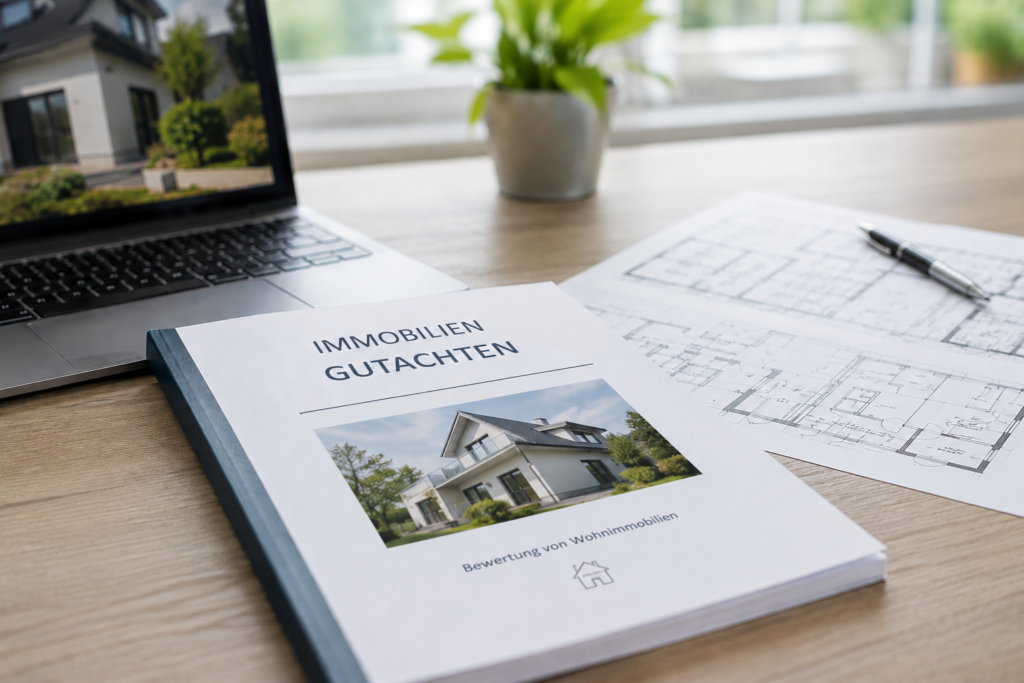

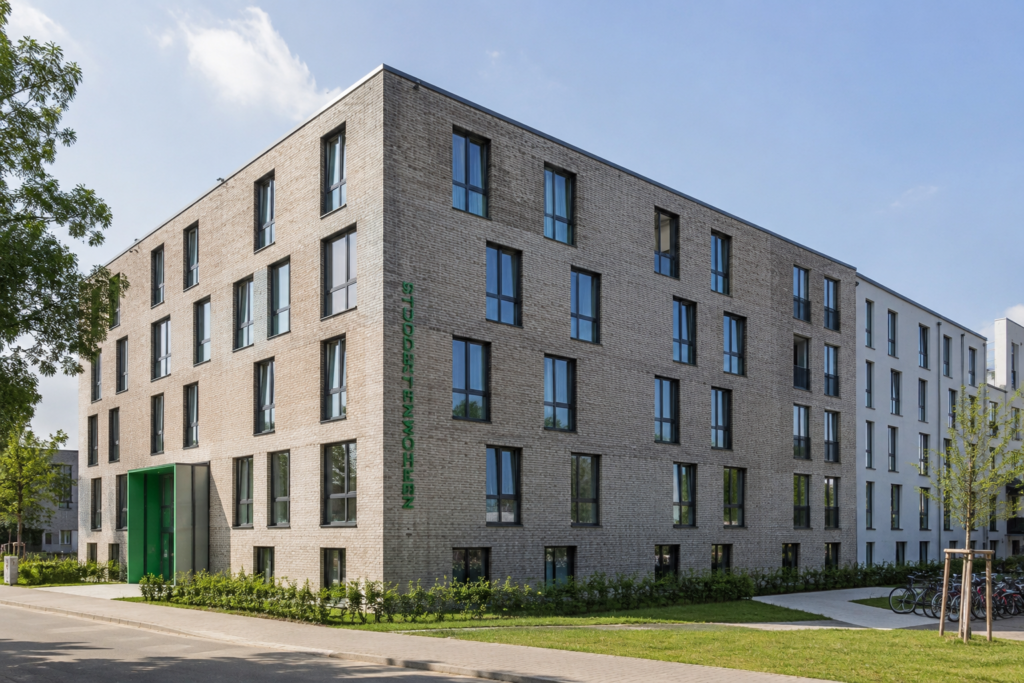
Student housing has evolved from a niche topic into a distinct asset class. Furnished micro-apartments, privately operated student residences, and entire student apartment buildings are regarded by investors as recession-resistant – demand at university locations has significantly exceeded supply for years. Crucial for the valuation is the fact that "student housing" is not a uniform property type: The spectrum ranges from individual furnished owner-occupied apartments as capital investments to professionally operated student residences. Anyone who wants to value student housing requires an appraisal report that accurately captures this spectrum.
The core issue: The value of a student apartment depends less on the floor area than on the sustainably achievable rent per square meter – and on whether this rent remains viable despite high tenant turnover, furniture wear and tear, and potential rent regulation. The central question is: Is it a property suitable for third-party use or an operator-dependent specialized property?
Two property types, two valuation approaches
Before any valuation, the question arises as to what is actually being valued. Because behind the term lie two fundamentally different property types that require different approaches under the ImmoWertV.
The individual student apartment as a capital investment
When valuing an individual, usually furnished apartment in a subdivided apartment building, the sales comparison approach sales comparison approach takes precedence – supported and substantiated by an income analysis. The challenge: Comparable prices for small, furnished rental units are scarce, and the purchase price regularly includes a premium for furniture and yield that must be deducted. The seemingly high price per square meter must not be adopted as a valuation benchmark without verification.
The student residence as an operator-managed property
An entire student residence or apartment building with a unified operation is a operator-run property and is in the Income approach valued. Whether the property is leased to a specialized operator or operated in-house fundamentally changes the analysis: In the case of an operator lease, the security and sustainability of the lease agreement are paramount; in the case of in-house operation, it is the actually achievable all-in rents less the full management burden.
The same operator logic also governs the valuation of social-care properties such as care homes and Data centres.
The sustainably achievable rent – the critical approach
Student housing is typically rented out furnished and "all-in": The monthly flat rate includes, in addition to the base rent, furniture, operating costs, internet, and partly cleaning or service services. For the valuation, this gross amount must be reduced to a sustainable net base rent – only this is the appropriate gross income in the income approach. The furniture surcharge is remuneration for depreciable inventory, not for the property substance, and must not overstate the land value. Furthermore: The high fluctuation in the semester rhythm causes above-average re-letting and maintenance costs, which depress the achievable net rent.
Location and demand: the university location decides
Unlike a classic residential property, it is not just the quality of the residential location that counts, but the strength of the university location: Student numbers and their development, the size and reputation of the university and colleges, the proportion of out-of-town and international students, and the connection to the campus and public transport. Equally important is the competitive situation – a large new construction pipeline of competing apartment buildings can put noticeable pressure on rents and occupancy at a location. In high-price and migration regions such as Munich, structural supply shortages support demand, while in smaller university cities it depends directly on a single university.
Management, furnishing and remaining useful life
Student housing is management-intensive. Administration, tenant turnover, cleaning and the regular replacement of furnishings lead to significantly higher management costs than for normal residential space – in the income approach they are to be set realistically and not according to residential standard. The furnishings themselves are depreciable inventory with a short reinvestment cycle and are to be considered separately from the building value. In the remaining useful life it must be taken into account that intensive use and wear and tear on fittings entail higher maintenance requirements.
Property interest rate and third-party usability
The property yield rate typically lies between that of standard residential properties and pure operator-dependent assets. The decisive factor is the alternative use potential: A modern micro-apartment with its own kitchenette and bathroom can be easily rented to commuters or young professionals – the risk of alternative use is low, and the risk premium correspondingly moderate. A specialized student residence with very small rooms, shared sanitary facilities, and large communal areas, on the other hand, is hardly adaptable for alternative use; here, a higher interest rate and a separate assessment of income value and land value (liquidation scenario) are appropriate.
Legal framework
Several regulations directly affect the valuation: the limits of furnished short-term leases and the handling of the furnishing allowance under the rent control provisions (§§ 556d et seq. BGB), municipal misuse prevention ordinances – such as in Munich –, which prohibit hotel-like short-term rentals, as well as the condominium structure in subdivided properties. If there are funding or occupancy restrictions (e.g., subsidized housing or cooperations with student housing organizations), they limit the achievable rent and must be explicitly recorded in the appraisal report.
Conclusion
Valuing student housing means clearly distinguishing between the capital investment with alternative use potential and the operator-dependent specialized property. A reliable market value appraisal combines the sales comparison and income approaches, adjusts the furnished all-inclusive rent to a sustainable basis, and transparently shows how much of the value depends on location, furnishing, and operations – and how much the physical substance contributes even in the event of alternative use.
The methodological basis for income-producing properties is described by the Income approach.
Please note: the content of this article is provided for general information only and does not constitute legal, tax, financial or investment advice. It is not a substitute for individual advice from a licensed lawyer, tax adviser or financial adviser. Despite careful research, we accept no liability for the accuracy, completeness or currency of the information provided. For specific legal or tax questions, please consult a qualified professional adviser.